Adapter Design Pattern
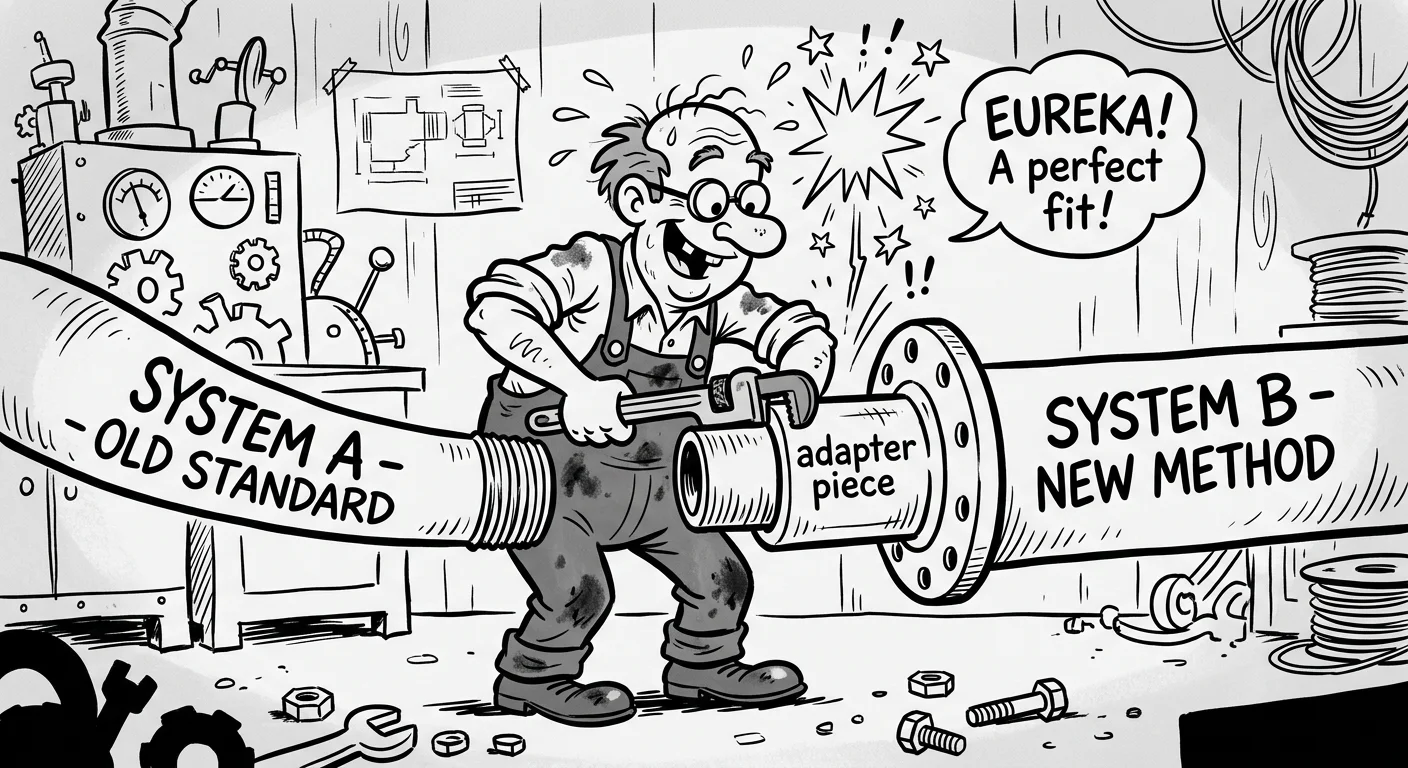
The Adapter Design Pattern is a structural design pattern that allows objects with incompatible interfaces to work together. The pattern acts as a bridge between two incompatible interfaces by providing a wrapper that translates the interface of one object into an interface that the client expects.
Problem
Consider a scenario where you have a client that expects a specific interface to interact with an object. However, the object you want to use does not implement the required interface. Modifying the object's interface to match the client's expectations is not feasible due to various reasons, such as the object being part of a third-party library or having a complex interface that cannot be easily changed.
Solution
The Adapter Design Pattern solves this problem by providing a wrapper class that implements the client's interface and delegates the calls to the adapted object. The adapter class translates the calls from the client's interface to the interface of the adapted object, allowing them to work together seamlessly.
The Adapter Design Pattern consists of the following components:
- Target: Defines the interface that the client expects.
- Adapter: Implements the Target interface and wraps the adapted object. It translates the calls from the client's interface to the interface of the adapted object.
- Adaptee: Represents the object that needs to be adapted. It has an incompatible interface that cannot be directly used by the client.
- Client: Interacts with the Target interface to use the adapted object through the Adapter.
Example
This example uses a legacy payment gateway that has an incompatible interface with a new payment processing system.
The IPaymentGateway interface defines the methods the new system expects. The legacy gateway has a different interface
that needs adapting before it can work alongside the new one.
<?php

interface IPaymentGateway
{
    public function processPayment(float $amount): void;
}

class LegacyPaymentGateway
{
    public function pay(float $amount): void
    {
        echo "Processing payment of \${$amount} using the legacy payment gateway.\n";
    }
}

class PaymentGatewayAdapter implements IPaymentGateway
{
    private $legacyPaymentGateway;

    public function __construct(LegacyPaymentGateway $legacyPaymentGateway)
    {
        $this->legacyPaymentGateway = $legacyPaymentGateway;
    }

    public function processPayment(float $amount): void
    {
        $this->legacyPaymentGateway->pay($amount);
    }
}

// Client code
$legacyPaymentGateway = new LegacyPaymentGateway();
$paymentGatewayAdapter = new PaymentGatewayAdapter($legacyPaymentGateway);
$paymentGatewayAdapter->processPayment(100.0);
The IPaymentGateway interface defines what the new system expects. LegacyPaymentGateway has a different method
signature — it exposes pay() instead of processPayment(). The PaymentGatewayAdapter bridges the gap: it
implements IPaymentGateway and delegates the call through to the legacy gateway's pay() method.
The client code never knows it is talking to a legacy system. It interacts exclusively through the
IPaymentGateway interface.
When to Use
Use the Adapter pattern when you want to standardise the interface of an existing class, or when you need a reusable class that can work with multiple classes that have different interfaces. It is also useful when you need to integrate with classes whose interfaces are not known until runtime.
Advantages of the Adapter Pattern
The Adapter Design Pattern provides several advantages:
- Seamless integration: The Adapter allows objects with incompatible interfaces to work together seamlessly without modifying their existing code.
- Reusability: The Adapter can be reused to adapt multiple objects with different interfaces to work with the same client code.
- Flexibility: The Adapter provides flexibility by allowing the client to interact with the adapted object through a common interface.
- Encapsulation: The Adapter encapsulates the translation of calls between the client's interface and the adapted object's interface, keeping the client code clean and simple.
- Maintainability: The Adapter pattern improves maintainability by isolating the changes required to adapt an object to a separate class.
Related Patterns
- Bridge Pattern: The Adapter and Bridge patterns are similar in that they both involve wrapping an object to provide a different interface. However, the Adapter pattern is used to make two incompatible interfaces work together, while the Bridge pattern is used to separate an abstraction from its implementation.
- Decorator Pattern: The Adapter and Decorator patterns are similar in that they both involve wrapping an object to provide additional functionality. However, the Adapter pattern is used to provide a different interface to an object, while the Decorator pattern is used to add new behaviour to an object without changing its interface.
- Facade Pattern: The Adapter and Facade patterns are similar in that they both involve providing a simplified interface to a complex system. However, the Adapter pattern is used to make two incompatible interfaces work together, while the Facade pattern is used to provide a unified interface to a set of interfaces in a subsystem.
- Proxy Pattern: The Adapter and Proxy patterns are similar in that they both involve wrapping an object to provide additional functionality. However, the Adapter pattern is used to provide a different interface to an object, while the Proxy pattern is used to control access to an object.
- Composite Pattern: The Adapter and Composite patterns are similar in that they both involve wrapping objects to provide a unified interface. However, the Adapter pattern is used to make two incompatible interfaces work together, while the Composite pattern is used to treat individual objects and compositions of objects uniformly.
Conclusion
The Adapter Design Pattern is a powerful pattern that allows objects with incompatible interfaces to work together. By providing a wrapper that translates the interface of one object into an interface that the client expects, the Adapter pattern enables seamless integration between different systems. The pattern is widely used in software development to standardise interfaces, improve reusability, and simplify code maintenance.